Silk vs Satin: What's the Difference?
They look alike on a screen — but one is a fibre and the other is a weave. Here's how to tell, and why it matters.
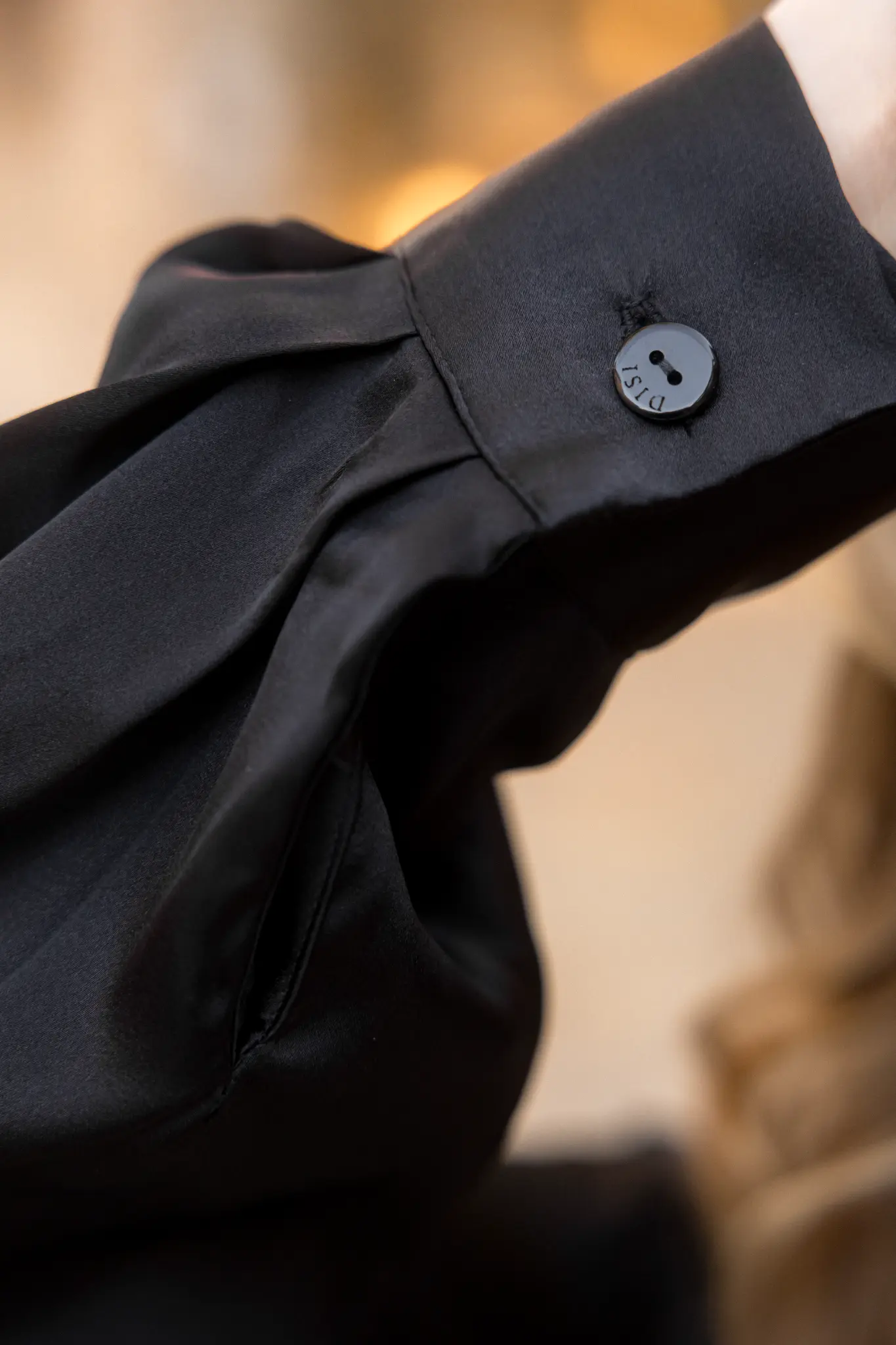
Silk is a fibre, satin is a weave
This is the heart of the confusion. Silk is a natural protein fibre spun by silkworms. Satin is not a material at all — it's a way of weaving threads so the surface catches the light. Satin can be made from silk, but most "satin" you'll find is woven from polyester or nylon.
Why the difference is felt, not just seen
Real mulberry silk breathes, regulates temperature, and is naturally hypoallergenic — it warms in winter and cools in summer. Polyester satin traps heat and moisture against the skin. On camera they shimmer alike; on the body they are worlds apart.
How to tell them apart
Silk feels warm and soft and gives a quiet, deep glow rather than a plastic shine. It creases softly and recovers. Burn a stray thread (carefully) and silk smells of burnt hair and turns to ash; synthetic satin melts into a hard bead.
What DISI uses
Every DISI piece is cut from 100% Grade 6A mulberry silk at 22 momme — the finest, longest, most uniform silk fibre there is. Never polyester, never a blend. That is why our silk feels like a second skin, and why it lasts.